How Full-Color Transfers Expand Your Custom Apparel Options
When screen printing alone doesn't quite cover what you need
I have been working in custom apparel for over a decade, and one of the most common frustrations I hear from clients is that their design has too many colors, too much detail, or needs to go onto a tricky fabric. Standard screen printing can handle a lot, but it has limits. That is where full-color transfers come into play. They are not a replacement for screen printing; they are a different tool for jobs that demand photographic detail, gradient blends, or small quantities without sacrificing quality.
Think about a local restaurant that wants staff T-shirts with a full-color photo of their signature dish printed on the back. With traditional screen printing, that would mean separating the photo into four or more screens, registering them perfectly, and then printing a minimum run that might be far more than the restaurant actually needs. Full-color transfers let you print that same photo onto a special paper or film, then heat-press it onto the garment. The result is sharp, vibrant, and durable. I have used this method for everything from sports team uniforms to promotional giveaways, and it consistently delivers where other methods fall short.
What exactly are full-color transfers?
At its simplest, a transfer is a pre-printed design that gets applied to fabric using heat and pressure. Full-color transfers take this concept and add the ability to reproduce complex artwork with many colors, including photographs and subtle gradients. The printing is done digitally onto a carrier sheet, then the design is transferred onto the garment. This process is sometimes called digital heat transfer or DTG transfer, but the key idea is that you get full color without the setup of multiple screens.
One major advantage is the ability to print small quantities economically. If you need only a dozen shirts for a trade show, setting up a screen print run might cost more per shirt than the transfer method. With full-color transfers, you can print one shirt or a hundred, and the per-unit cost stays relatively flat. That matters for small businesses, nonprofits, or any group that cannot commit to large minimums.
Connect with us on Instagram.
Where do full-color transfers shine?
I have found three situations where this technique outperforms traditional screen printing almost every time:
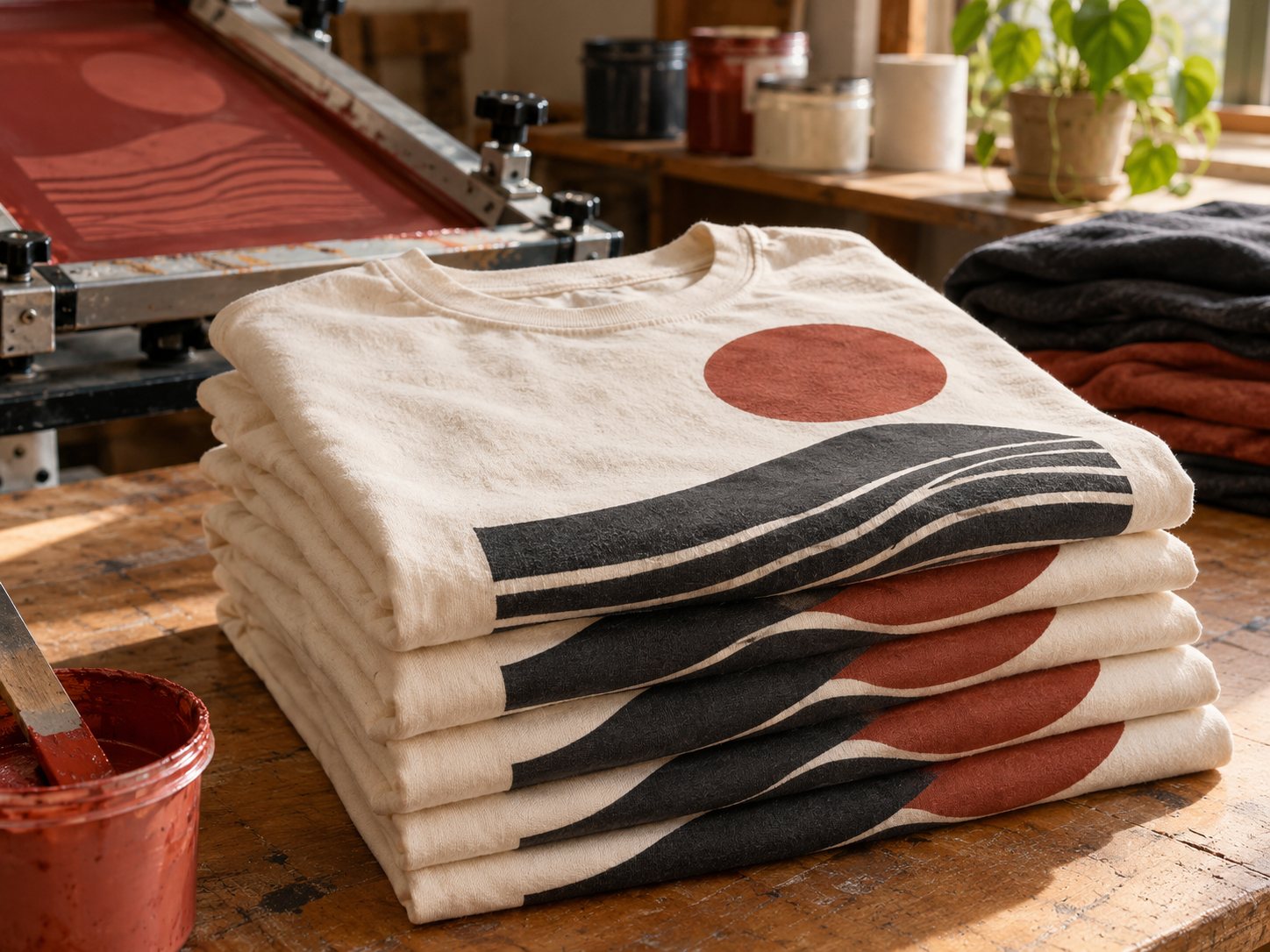
- Photographic or highly detailed artwork. If your design has a portrait, a landscape, or intricate line art with many colors, a transfer can reproduce it faithfully.
- Short runs or one-off items. Samples, prototypes, and small team orders become affordable because there is no screen setup fee.
- Garments with tricky surfaces. Nylon jackets, polyester blends, and even some performance fabrics can be difficult to screen print on because the ink does not bond well. Full-color transfers use an adhesive that sticks to a wider range of materials.
That said, this method is not perfect for everything. If you are ordering hundreds of identical shirts with a simple two-color logo, screen printing will usually be faster and cheaper per shirt. The transfer film can also have a slightly thicker hand feel compared to screen-printed ink. I always tell clients to touch a sample before committing to a large order. The trade-off between detail and feel is real, and it depends on the fabric and the design.
Durability and wash testing
A common worry I hear is that transfers will peel or crack after a few washes. That can happen with low-quality materials or improper application, but modern full-color transfers are surprisingly tough. I have tested shirts that have been through dozens of laundry cycles, and the print stays intact. The key is using a good heat press with consistent temperature and pressure, and letting the transfer cool before peeling the carrier. I also recommend washing garments inside out in cold water and avoiding bleach. With those simple steps, a well-applied transfer can last as long as the shirt itself.
One thing I have learned over the years is that not all transfer papers are the same. Some are designed for light fabrics, some for dark, and some are optimized for synthetic blends. Matching the paper to the garment is half the battle. A good supplier will walk you through the options. I always keep a few test prints on hand so clients can see and feel the difference between a standard transfer and a premium one.
Comparing full-color transfers to other decoration methods
Besides screen printing, there are other ways to put full-color artwork on apparel. Direct-to-garment (DTG) printing uses an inkjet printer that sprays ink directly onto the fabric. DTG works well on 100% cotton shirts, but it struggles on dark fabrics or polyester blends. Full-color transfers, on the other hand, work on a wider variety of materials and often produce more vibrant colors on dark backgrounds because the transfer includes a white underbase layer.
Another option is sublimation, which infuses dye into polyester fabrics. Sublimation gives a soft, permanent print, but it only works on white or light-colored polyester garments. If your design needs to go on a cotton shirt or a dark nylon jacket, sublimation is not going to work. Full-color transfers fill that gap nicely. They can handle cotton, polyester, nylon, and even some blends, as long as the fabric can withstand the heat of the press.
Practical advice for your first order
If you are considering full-color transfers for your next project, here are a few things to keep in mind:
- Start with a high-resolution image. The output can only be as good as the input. At least 300 DPI at the final print size is a safe target.
- Ask for a proof or a sample before printing the whole run. Seeing the colors on your actual fabric is the best way to avoid surprises.
- Choose the right transfer paper for your garment color and material. Your decorator should be able to guide you.
- Follow the care instructions. Turn the garment inside out, wash in cold water, and tumble dry on low. This extends the life of the print.
- Consider the placement. The flattest part of the garment, like the chest or back, works best. Avoid seams and pockets if possible.
These steps might seem basic, but I have seen plenty of orders go sideways because someone skipped the sample step or used a low-res logo pulled from a website. Taking the extra time upfront saves headaches later.
When full-color transfers are not the best choice
No method is perfect. I have run into cases where a client wanted a very large print, like a full back design, and the transfer sheet was not large enough to cover the area in one piece. In those situations, screen printing or a multi-panel transfer might be necessary. Also, if the garment is very delicate or cannot handle high heat, like some wool or silk blends, a heat press could damage the fabric. Always check the garment's care label and test on a small area first.
Another limitation is cost per unit for very large orders. If you need 500 shirts with the same design, screen printing will almost always be more economical. The setup cost gets spread across many units, bringing the per-shirt price down. With transfers, the material cost per print stays higher. That is why I recommend transfers for runs under fifty pieces, or for designs that change frequently.
Bringing it all together
In my experience, the best approach is to know what each method does well and choose accordingly. Full-color transfers are a powerful option when you need detail, color complexity, or flexibility in fabric choice. They are not a magic bullet, but they fill an important niche in the custom apparel world. If you are in Garden Grove or anywhere nearby, having a local shop that understands these nuances can make a big difference in the quality of your finished product.
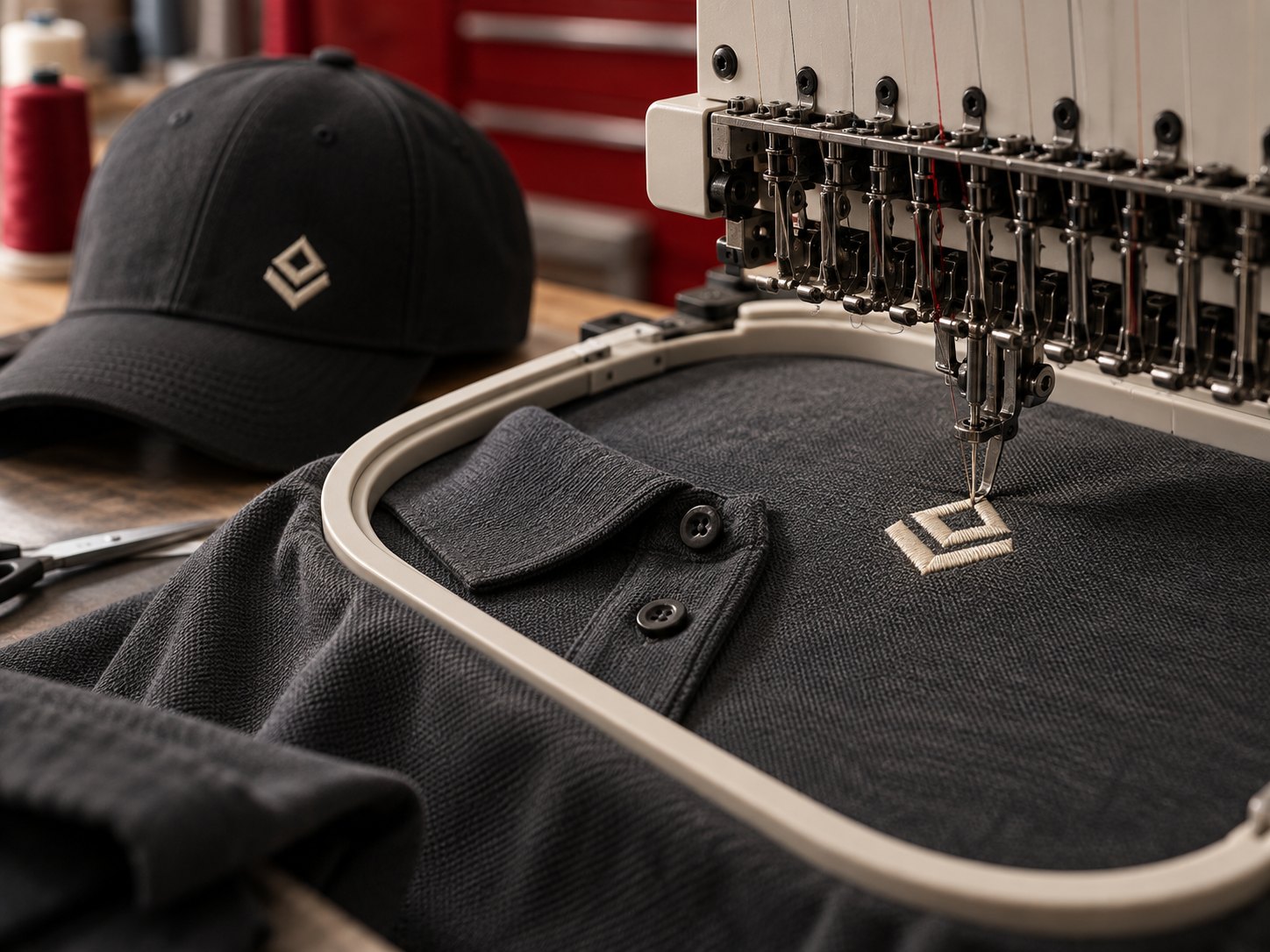
DSP Printing, located at 11611 Salinaz Dr Ste O, Garden Grove, CA 92843, can be reached at +1 714-951-4919 for custom screen printing and embroidered apparel services for businesses and organizations.
Corrections
Spot something wrong? Send it to the desk and it gets fixed in the open.